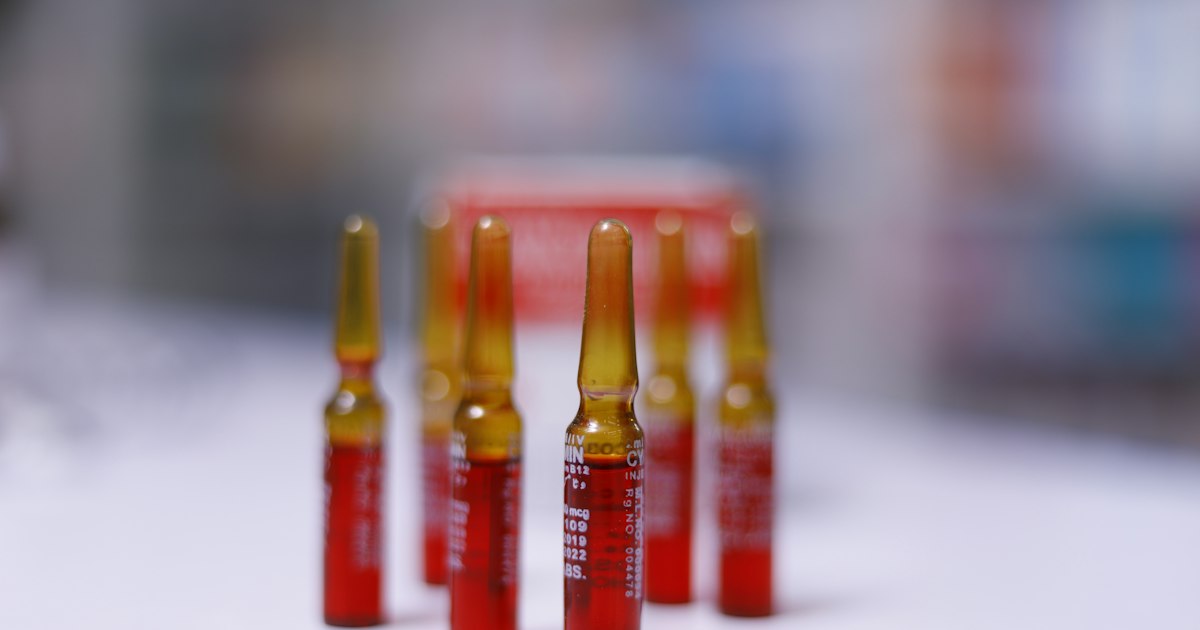
Tests while taking Essential Phospholipids

Essential phospholipids are almost always taken because of the "liver": elevated transaminases, fatty hepatosis on ultrasound, taking medications or simply a desire to "support" the organ. But without tests it is impossible either to understand whether there is a problem or to assess whether anything has changed. Our editorial team explains which examinations make sense, how to interpret them and where the limits of the laboratory lie.
Why do tests if the drug is safe
Essential phospholipids are generally well tolerated: the most common adverse effects named in package inserts are abdominal discomfort, loose stools and, rarely, allergic reactions. So tests during their intake are needed not so much to monitor the safety of the drug itself as to monitor the state of the liver and the reason the person is taking it.
Elevated liver enzymes can be the result of many conditions: fatty liver disease, viral hepatitis, alcoholic injury, the toxic effect of drugs and supplements, autoimmune diseases, disorders of iron or copper metabolism, and in athletes even intense training. The drug does not specifically treat any of these causes.
If you start taking phospholipids without a diagnosis, you can lose time. For example, chronic hepatitis C or B runs for years without symptoms, while timely antiviral treatment fundamentally changes the prognosis. No "hepatoprotector" can replace this.
In addition, tests are the only way to honestly assess whether any of the things a person is doing is helping: a change in diet, weight loss, giving up alcohol or taking a drug. Without baseline data, any "improvement" remains a subjective feeling.
The basic set before starting
The minimal examination that makes sense to do before starting essential phospholipids covers the basic liver panels and metabolic parameters. Our editorial team provides an indicative list; the final scope is determined by a doctor in view of complaints and medical history.
| Parameter | What it reflects | Why it matters when taking phospholipids |
|---|---|---|
| ALT, AST | Damage to hepatocytes | A baseline for assessing the dynamics |
| GGT, alkaline phosphatase | Cholestasis, the effect of alcohol and drugs | To distinguish bile stasis from hepatocellular injury |
| Bilirubin (total, direct) | Bilirubin metabolism, bile outflow | To detect jaundice, Gilbert’s syndrome |
| Albumin, INR, platelets | Synthetic liver function, signs of fibrosis | To assess the severity of the process |
| Glucose, HbA1c | Carbohydrate metabolism | Insulin resistance — a key factor in fatty liver |
| Lipid profile | Cholesterol, triglycerides | Metabolic risk, a frequent companion of steatosis |
| HBsAg, anti-HCV | Viral hepatitis | To rule out a cause requiring specific treatment |
For athletes it is important to add creatine phosphokinase (CPK). AST and, to a lesser extent, ALT are found not only in the liver but also in skeletal muscle. After a hard workout their level can rise, and without CPK it is easy to mistakenly "diagnose" liver damage.
As indicated, a doctor may expand the examination: ferritin and transferrin saturation (iron overload), ceruloplasmin in young patients (Wilson’s disease), autoimmune markers, TSH. Taking phospholipids itself does not change these tests, but they help to find the cause.
Tests should be taken fasting, after at least 48–72 hours without intense strength training and without alcohol. This way the results will be comparable with subsequent measurements.
Instrumental methods: ultrasound, elastography, fibrosis indices
Laboratory parameters poorly reflect the amount of fat in the liver and the degree of fibrosis. Transaminases can be normal even with pronounced steatosis and significant fibrosis. That is why clinical guidelines on fatty liver disease emphasize the assessment of fibrosis as the main prognostic factor.
Ultrasound examination can detect moderate and pronounced steatosis but is not very sensitive to a mild degree and does not assess fibrosis. Transient elastography (for example, FibroScan) measures liver stiffness, and in some devices also the ultrasound attenuation parameter CAP, which correlates with the amount of fat.
The AASLD guidelines (2023) propose as a first step the calculated FIB-4 index, computed from age, AST, ALT and platelet count. A low value makes it possible to rule out advanced fibrosis with high probability; intermediate and high values are grounds for elastography and a consultation with a hepatologist.
For a person taking phospholipids this has practical significance: even if the transaminases have normalized, it is worth knowing your fibrosis risk. It is precisely this, not the percentage reduction of ALT, that determines how closely you need to monitor the liver going forward.
Monitoring during intake and how to read the dynamics
In clinical studies of essential phospholipids, courses usually lasted from a few weeks to a few months. It is logical to repeat liver panels no earlier than after 1–3 months: more frequent measurements will mainly reflect random fluctuations.
On repeat examination, the same parameters are compared, preferably in the same laboratory and under the same preparation conditions. It is useful to record parallel lifestyle changes: weight, waist circumference, amount of alcohol, training load, and the intake of other drugs and supplements.
- Transaminases decreased, weight decreased:most likely the main contribution is from weight loss; the strategy is worth continuing.
- Transaminases unchanged:a reason to reconsider the diagnosis and look for another cause, rather than prolonging the course of a "hepatoprotector".
- Transaminases increased:a doctor’s consultation is needed; all drugs and supplements, including "natural" ones, should be checked.
- Bilirubin, itching, dark urine appeared:signs that require seeing a doctor without delay.
Separately, it is worth remembering that the laboratory reference intervals for ALT differ between laboratories, and some hepatology societies propose lower "healthy" limits than the traditional ones. So it is better to assess the dynamics together with a doctor rather than by the "normal/not normal" marks on the form.
If phospholipids are taken against a background of potentially hepatotoxic drugs, the testing schedule is determined precisely by those drugs and their recommendations. Taking phospholipids is not a reason to monitor the liver less often.
Typical interpretation mistakes
The first common mistake is to consider normal transaminases proof of a healthy liver. As already noted, in fatty liver disease even significant fibrosis can exist with normal enzymes. The second mistake is to attribute any decrease in ALT to the drug’s action, ignoring natural variability and the influence of other factors.
The third mistake is characteristic of athletes: a rise in AST and ALT after strength training is interpreted as liver damage and "treatment" is started. Monitoring CPK and a repeat test after a few days of rest usually clarify the situation.
The fourth mistake is to rely on phospholipids as protection while taking oral anabolic steroids or other hepatotoxic substances. Tests in such a situation may show damage, but the drug does not reduce its risk, and the only effective step is to stop the toxic exposure and see a doctor.
Finally, do not forget about other organs. For people with fatty liver disease, guidelines recommend assessing cardiovascular risk, since cardiovascular events are one of the leading causes of death in this group of patients.
Editorial conclusions
Tests while taking essential phospholipids are needed primarily to determine the cause of liver problems and assess its real state, not to monitor the toxicity of the drug itself.
The basic set is transaminases, GGT, alkaline phosphatase, bilirubin, glucose, lipids and markers of viral hepatitis; for athletes, also CPK. The key prognostic indicator is fibrosis risk, assessed by FIB-4 and elastography.
The dynamics of liver panels should be interpreted together with a doctor, in view of changes in weight, alcohol and loads, rather than as direct evidence of the drug’s effectiveness.
Our editorial team also recommends reading our articles on the effect of essential phospholipids on the liver and kidneys, on the contraindications to them, and on tests while taking meldonium.
References
- Rinella ME, Neuschwander-Tetri BA, Siddiqui MS, et al. AASLD Practice Guidance on the clinical assessment and management of nonalcoholic fatty liver disease. Hepatology. 2023;77(5):1797–1835.
- European Association for the Study of the Liver (EASL), European Association for the Study of Diabetes (EASD), European Association for the Study of Obesity (EASO). EASL–EASD–EASO Clinical Practice Guidelines for the management of non-alcoholic fatty liver disease. J Hepatol. 2016;64(6):1388–1402.
- Kwo PY, Cohen SM, Lim JK. ACG Clinical Guideline: evaluation of abnormal liver chemistries. Am J Gastroenterol. 2017;112(1):18–35.
- Pettersson J, Hindorf U, Persson P, et al. Muscular exercise can cause highly pathological liver function tests in healthy men. Br J Clin Pharmacol. 2008;65(2):253–259.
- Gundermann KJ, Gundermann S, Drozdzik M, Mohan Prasad VG. Essential phospholipids in fatty liver: a scientific update. Clin Exp Gastroenterol. 2016;9:105–117.
- Lieber CS, Weiss DG, Groszmann R, Paronetto F, Schenker S. II. Veterans Affairs Cooperative Study of polyenylphosphatidylcholine in alcoholic liver disease. Alcohol Clin Exp Res. 2003;27(11):1765–1772.
Andriy Melnyk
A strength-sports coach and author of programs for beginner and intermediate levels. Writes about training planning.